PHENIX (Power and Heat through sustainable Electricity and New Innovations for X essential services infrastructures) strengthens the resilience of essential services in Ukraine through a decarbonized (photovoltaic) and sustainable energy supply (local CSOs).
The Benefits of Decentralized Solar Solutions
The PHENIX project is fully aligned with Ukraine’s political commitment to begin preparing today for the country’s reconstruction by focusing on modern, more sustainable, and resolutely forward-looking solutions. The Ukrainian Recovery Plan highlights one of its five guiding principles:
“Build back better,” by promoting green technologies and international best practices to sustainably improve living conditions.
Ukraine hopes to use its reconstruction efforts to transform its energy system and make communities more resilient.
Why choose decentralized solar power?
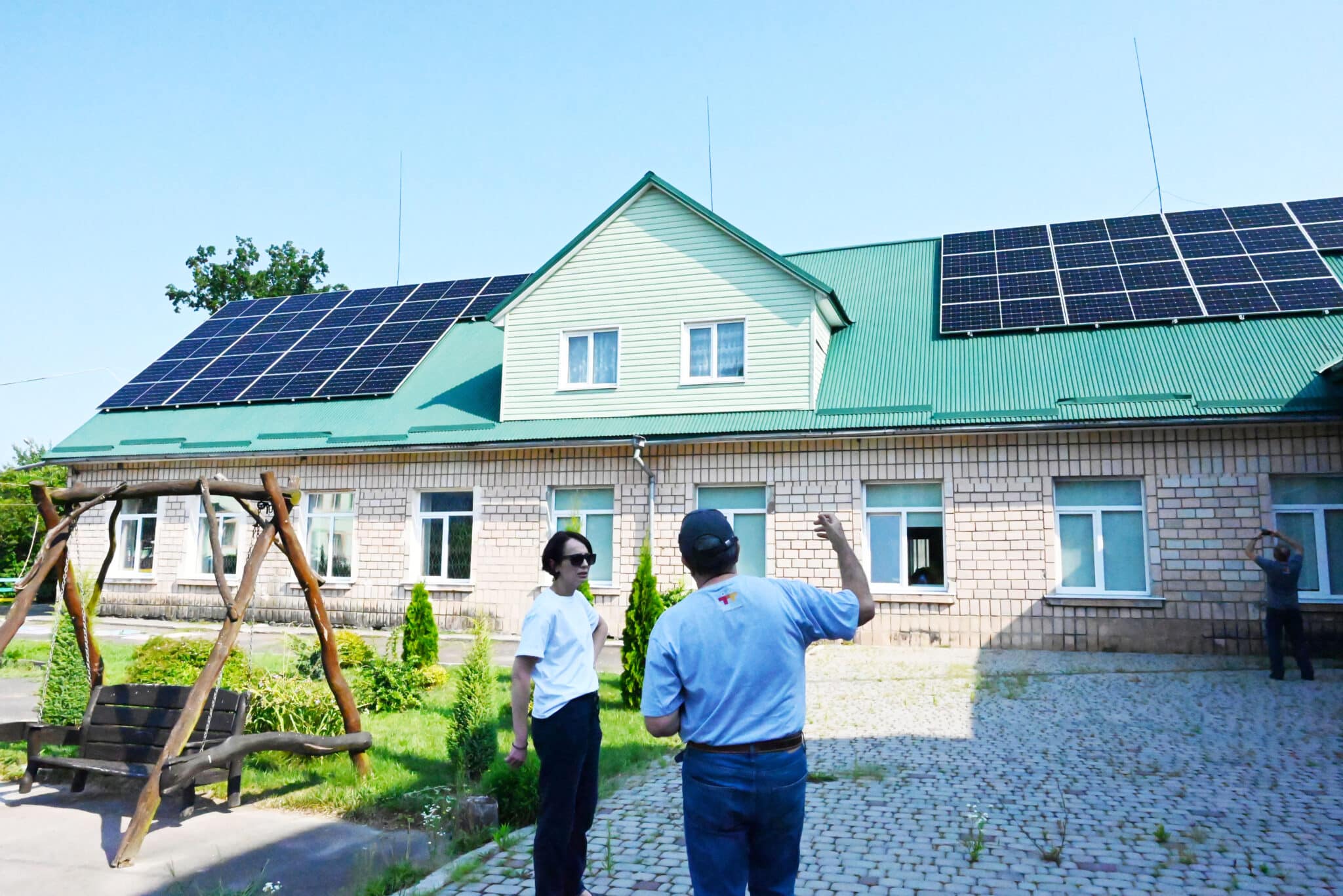
A strategic shift is underway toward decentralized, hybrid, sustainable, and low-carbon solutions. These systems, installed directly on buildings, provide a more stable power supply right now—despite grid outages and disruptions—and, in the long term, reduce reliance on the centralized, carbon-intensive power grid, leading to greener energy consumption and lower bills.
Installing solar panels on hospitals, schools, and agricultural facilities contributes to several key objectives of the Ukrainian government:
– securing the energy supply amid the vulnerability of the national grid;
– strengthening the energy independence of local institutions;
– developing clean energy produced as close as possible to where it is needed, in line with Ukraine’s climate commitments and its future integration into the European Union.
As Maxim Timchenko, CEO of DTEK—one of the country’s leading private energy suppliers—points out:
“The development of green energy is not only a response to the climate crisis, but also to our need to strengthen energy security. […] Our economic recovery will be based on green energy.”
Expertise already applied
Since August 2023, the “Hybrid Solutions” emergency project, funded by the Crisis and Support Center (CDCS) of the Ministry for Europe and Foreign Affairs, has enabled Electricians Without Borders to deploy hybrid solar systems for nearly 100 essential facilities (hospitals, schools, water pumping stations).
How do hybrid systems work?
The installed systems typically combine solar panels, sometimes with storage batteries, a grid connection, and, if necessary, a backup generator.
The goal is to reduce dependence on the national grid and on diesel generators, which are costly, polluting, and difficult to fuel during times of conflict.
The system automatically manages multiple power sources based on sunlight levels, demand, and any grid outages.
Agrivoltaic solutions
The project also explores agrivoltaics, which involves installing solar panels above crops to generate electricity while providing shade to protect the plants and reducing water requirements.
This type of system helps preserve arable land, improve water management, strengthen local food and energy security, and develop new income-generating activities (preservation, processing, cooking, etc.).