The AGRIPOWHER project is coming to an end after nearly two years of implementation. It is dedicated to empowering women in agricultural entrepreneurship through renewable energy. It aims to strengthen the resilience of 30 women farmers while demonstrating the technical and economic viability of an off-grid agrivoltaic system integrated into a vocational training center in Benin. This installation, located on the training center’s grounds, directly supports its operations by powering the equipment and machinery used for agricultural processing and training activities, all for the benefit of the female trainees. The women receiving support, meanwhile, farm their own plots of land in a complementary manner.

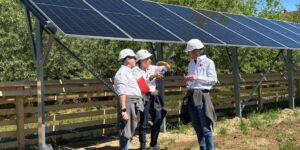
As part of this effort, a mission took place in Benin in June 2026, featuring several key stages of monitoring, training, and exchanges with local partners. The mission began with working meetings with the project’s long-standing partner, the Songhaï Training Center, in Porto-Novo. In Savalou, the project team conducted the acceptance inspection of the agrivoltaic system installed on the training center’s grounds. This step took place in the presence of the contractor Yoorg, which was responsible for installing the equipment.
A few non-conformities were identified and corrected on site, allowing the facility to be brought fully into compliance. Following this, the monitoring platform was commissioned to ensure optimal management of the system’s energy performance and its use in support of the center’s agricultural product processing and training activities. This monitoring system will also help ensure the facility’s long-term viability by facilitating performance tracking, anticipating potential maintenance needs, and ensuring its continued proper operation over time.
Strengthening the Skills of Local Teams
A training program was then conducted over four half-days, bringing together 22 participants: students nearing the end of their program, instructors from the center, electricians, and site management.
The sessions covered several key topics:
- the electrical safety of installations,
- system maintenance and sustainability,
- the growing guides,
- agroecological practices.
These training programs are designed to ensure long-term ownership of infrastructure and to strengthen local technical and agricultural management capacities.
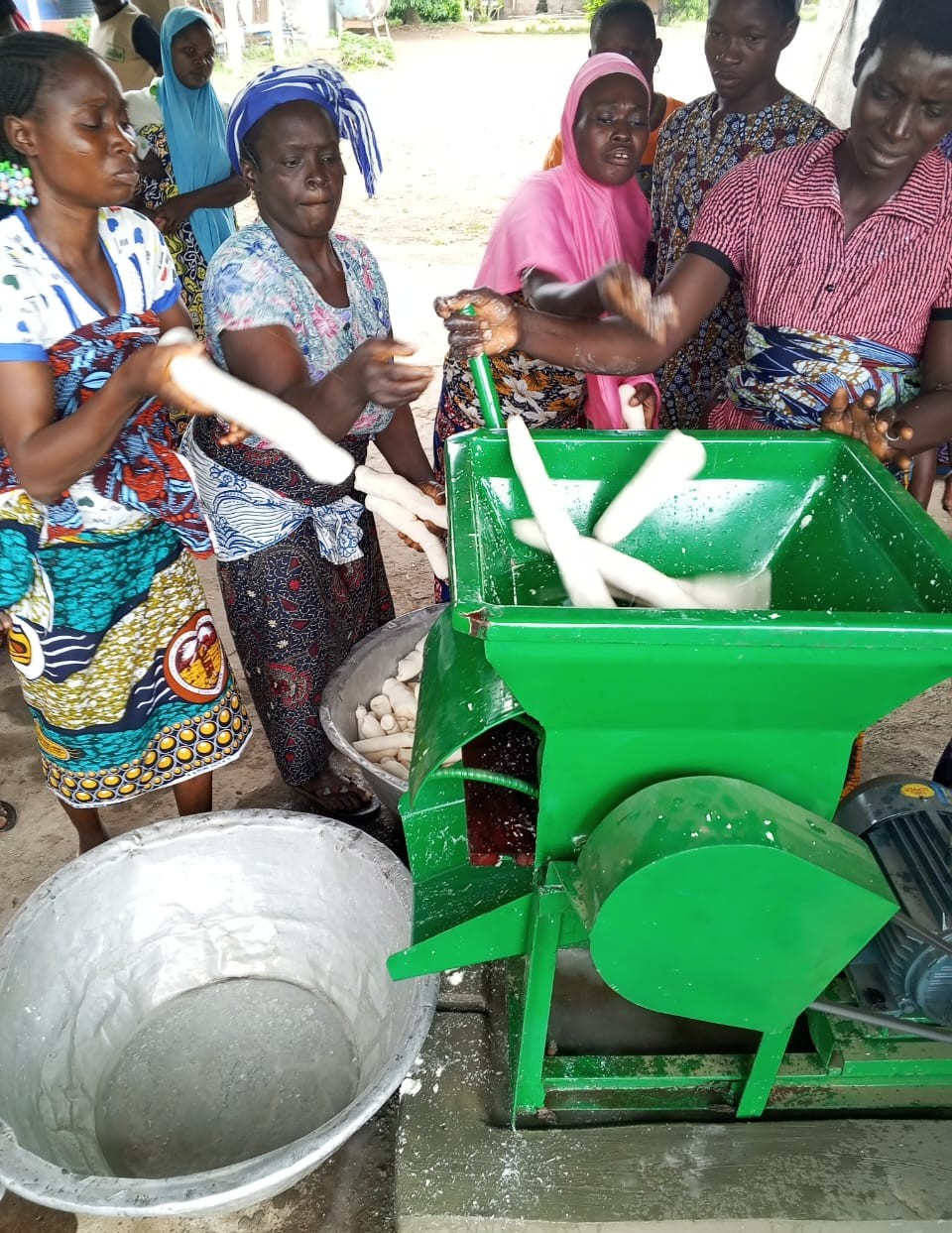
Support training for women farmers in the use of equipment for processing agricultural products
In-depth discussions were also held with the Songhai teams regarding the implementation of future training programs for 30 women.
Several areas were addressed collectively:
- organizing a schedule for machine usage to optimize their availability,
- the definition of a business model being considered by the center (low-cost half-day rentals, organization of specialized training sessions, etc.),
- consideration of which crops to prioritize based on the soil’s gradually increasing fertility.
At this stage, the crops being prioritized include, in particular, those that diversify and enrich the soil, such as ginger and turmeric. Starting in October, the plan is to diversify into vegetable crops (tomatoes, chili peppers, cabbage).
The partners have also been working on developing a training certificate for future beneficiaries, as well as on the educational content, with training scheduled to begin on August 1, 2026.
A project at the intersection of energy and agriculture
As the first phase of the AGRIPOWHER project draws to a close, it fully demonstrates the ability of agrivoltaic solutions to reconcile agricultural production, renewable energy generation, and adaptation to the effects of climate change.
Beyond technical innovation, it highlights a central issue: women’s access to the tools, skills, and infrastructure needed to develop resilient, income-generating agricultural activities.
By harnessing renewable energy to meet local needs, this project helps strengthen women’s autonomy and the region’s resilience.
Partners: Songhai, Aquilon, Forma El Tech, Hauts-de-France, Total Energies, Socomec, Sigeif