17 August 2026

Ukraine: The PHENIX Project—One Year After Its Launch, Initial Results Are Encouraging

In March 2025, Electricians Without Borders launched the PHENIX project in Ukraine, which aims to strengthen the resilience of the country’s essential services through a carbon-free and sustainable energy supply.

Spanning three years, the project plans to equip about ten essential infrastructure sites (key facilities in the education, health, and agriculture sectors) with solar solutions while training local stakeholders in their use and maintenance, and raising awareness among beneficiaries about the importance of sustainable energy solutions.
Three solar power plants have been commissioned

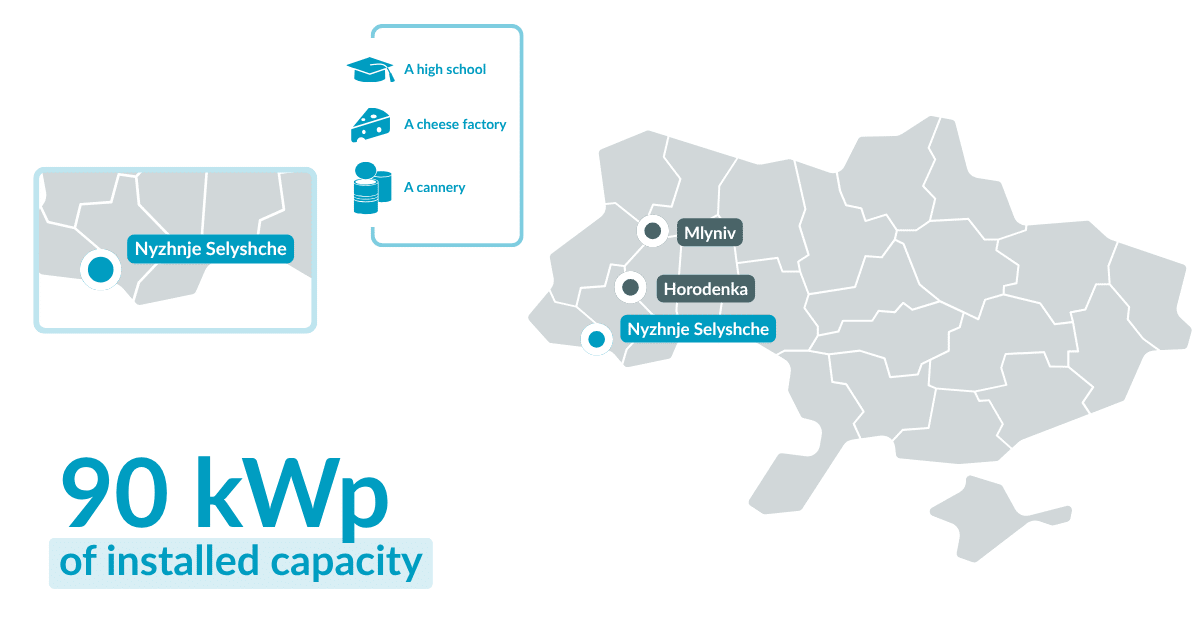
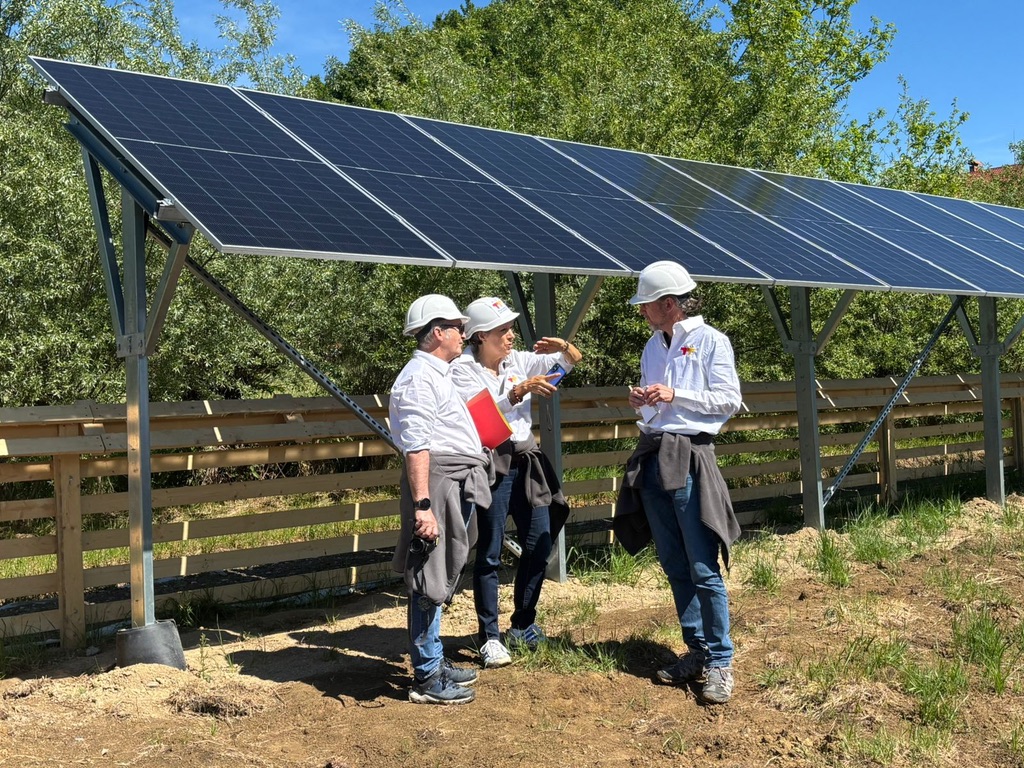
As part of this project, from May 16 to 23, 2026, three experts from Electricians Without Borders traveled to Ukraine, specifically to Nyzhnje Selyshche and Mlyniv (in the Transcarpathian and Rivne oblasts), where the first activities have been underway since last December.

This project, carried out in close collaboration with our local partners, CAMZ and ATDL, resulted in the commissioning of three hybrid solar installations : they are installed at a high school (25 kWp capacity), a cheese factory (35 kWp capacity), and a cannery (30 kMc capacity).

The experts were able to directly observe that the systems were functioning properly and verify that the consumption and production data matched the specifications established in advance with the local partners.

Empowerment: The First On-Site Training Session

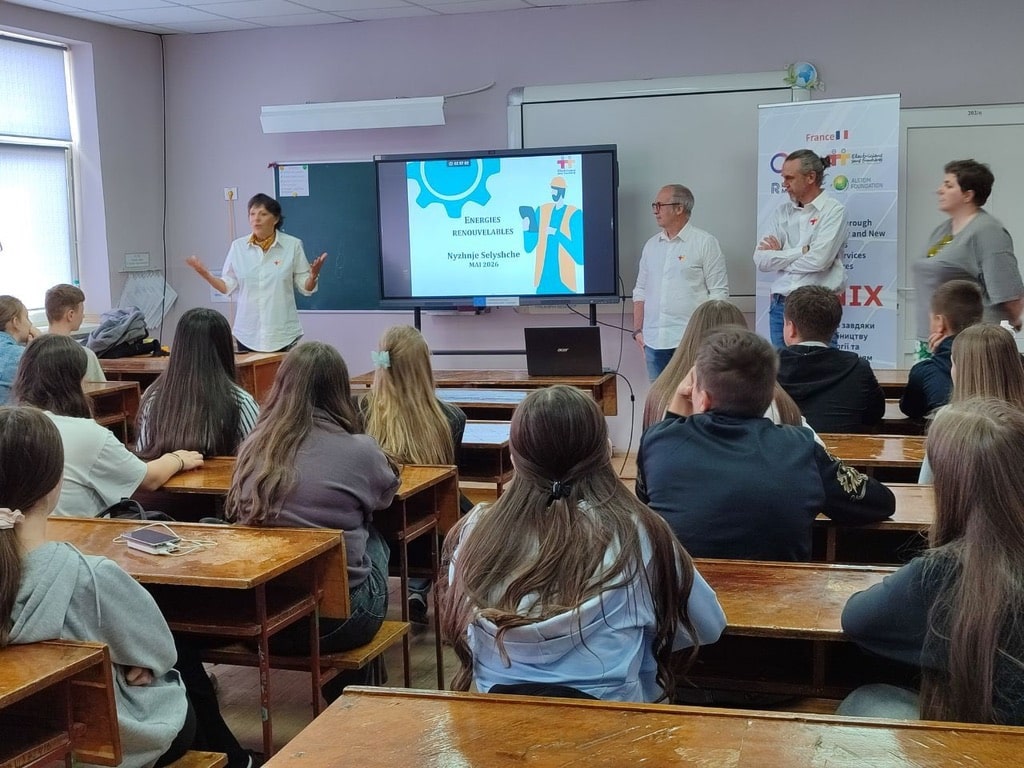
The Electricians Without Borders team also took advantage of its time on site to provide initial training to the users of the equipment at the cheese factory and cannery, as well as to the village residents, so that they could operate the equipment independently. About fifteen people were able to learn the technical principles behind how solar systems work and were educated about the challenges of global warming. This latter topic was also explored with two groups of high school students as part of an in-class awareness session (focusing on climate, renewable energy, and careers in the energy sector), illustrated by a guided tour of the facility (inverter, batteries). This approach both introduces these issues and demonstrates to students the value of having such a system at their high school.

Feedback from the field

This visit provided an opportunity to gather initial feedback from the beneficiaries, particularly the high school staff, who emphasized that this new system—by preventing the school from experiencing the power outages that affect the village—ensures that classes can continue uninterrupted for all students.

Finally, the experts visited other facilities that could be improved as part of the project to confirm the technical potential and actual needs for the benefit of local communities: a kindergarten and an EcoHub* in Nyzhnje Selyshche, and a school and a hospital in Mlyniv. Several proposals were put forward to ensure the implementation of the actions with the greatest impact in the medium and long term.

But what exactly is an EcoHub?*

An EcoHub is a multi-service space designed to be environmentally friendly and sustainable: it serves as a venue for discussion, interaction, and demonstrations, as well as for specific activities related to the energy transition.

As part of the PHENIX project, plans are underway to renovate a house in the village of Nyzhnje Selyshche, where our partners, CAMZ and ATDL, have already launched several solidarity initiatives, particularly to provide shelter for people displaced by the war. The goal is to turn it into a welcoming space for local organizations, a peaceful haven amid the conflict, and a place to recharge—whether for local residents or professionals. It also serves as a concrete demonstration of what can be achieved in the field of alternative energy: the idea is to create a comprehensive synergy around these topics and the various initiatives—particularly agroecological ones—already underway in the village.

Our Supporters