6 August 2026

Ukraine: Water and Electricity—How to Address the Humanitarian Crisis?

For more than four years, Ukraine’s energy infrastructure has been the target of repeated attacks. Power plants, substations, and distribution networks are being targeted as part of a strategy that goes beyond the military sphere: to deprive the civilian population of electricity, water, heat, and essential services.
So when there is a shortage of water and electricity, how can we respond to the humanitarian crisis?

At the start of 2026, millions of Ukrainians were facing power outages lasting up to 18 to 20 hours a day. In response to this major energy crisis in Ukraine, Electricians Without Borders—along with its local partners and French local governments and energy sector companies that have stepped up to help—is implementing emergency solutions to maintain vital services.

From generators to convection heaters, from solar lamps to hybrid photovoltaic systems, our goal since the start of the conflict has been clear : to ensure access to essential services through energy in the hardest-hit regions.
A Major Energy Crisis Persists in Ukraine

Since the start of the conflict, Russia has been waging a systematic campaign against the country’s energy infrastructure. By targeting power plants, electrical grids, and strategic facilities, it seeks to cause lasting disruption to people’s daily lives.

The consequences are significant: homes plunged into darkness, schools without heat, hospitals operating on limited power, and pumping stations at a standstill.

The intensity of the attacks shows no sign of letting up. To cite just one example, on the night of March 24–25, 2026, more than 1,000 drones were launched against Ukraine in just twenty-four hours, illustrating the scale of the pressure being exerted on civilian infrastructure.

In this context, restoring power is no longer just a matter of repairing the grid. It involves keeping hospitals running, ensuring access to safe drinking water, and maintaining essential services for the population.

How can you survive the winter without water or electricity?

Since the start of the conflict, Russia has been waging a systematic campaign against the country’s energy infrastructure. By targeting power plants, electrical grids, and strategic facilities, it seeks to cause lasting disruption to people’s daily lives.

The consequences are significant: homes plunged into darkness, schools without heat, hospitals operating on limited power, and pumping stations at a standstill.

The intensity of the attacks shows no sign of letting up. To cite just one example, on the night of March 24–25, 2026, more than 1,000 drones were launched against Ukraine in just twenty-four hours, illustrating the scale of the pressure being exerted on civilian infrastructure.

In this context, restoring power is no longer just a matter of repairing the grid. It involves keeping hospitals running, ensuring access to safe drinking water, and maintaining essential services for the population.

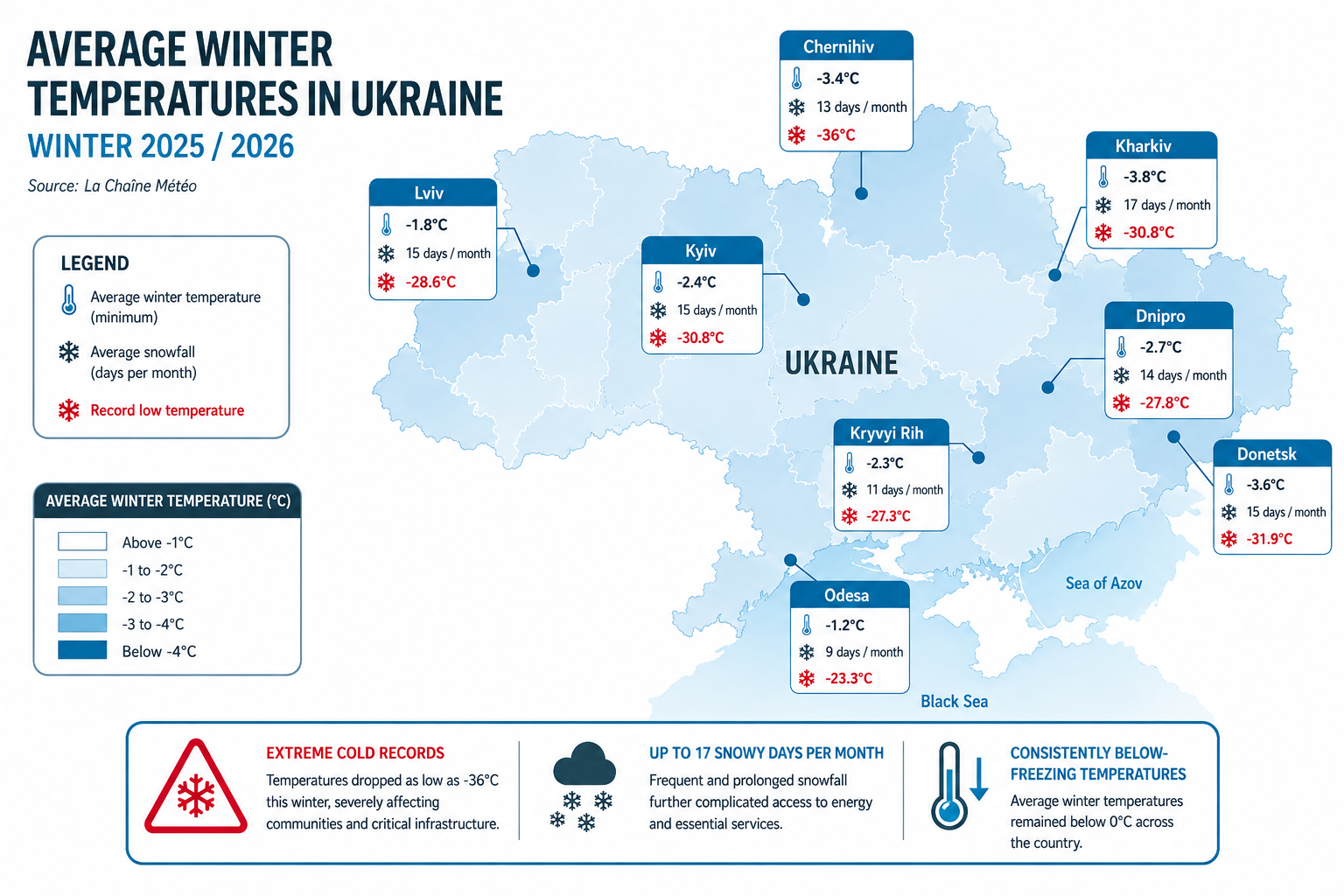
Winter further exacerbates the consequences of the war. Power outages disrupt every aspect of daily life: elevators are out of service, heating is cut off, there is no running water, and access to medical care is difficult.

Daily Life Amid the Cuts: Stories

Across the country, residents are adapting and looking for alternative solutions. But when temperatures drop to -25 °C, limits are quickly reached—whether in homes, schools, or healthcare facilities.

To shed light on this reality, Electricians Without Borders has collected the stories of many Ukrainian men and women facing these challenges.

▶️ Hospitals Dealing with Power Outages

In the operating room, while you’re under anesthesia, your machine can’t shut down. If it shuts down due to a power outage, you lose the constant monitoring, and the patient could die. There are also all the premature babies […] and those in intensive care who are directly dependent on the machines they’re connected to. “Testimonial from Christian Carrer, founder of AICM and partner of Electricians Without Borders”

▶️ Schools Facing the Energy Crisis

[Episode 2 – Coming Soon]

▶️ Access to water threatened by the shutdown of pumping stations

[Episode 3 – Coming Soon]

Emergency Solutions to Ensure Access to Energy

In light of the severity of the energy crisis in Ukraine, Electricians Without Borders has stepped up its efforts to support critical infrastructure.

During the winter of 2025–2026, the teams deployed:

  • More than 180 generators with a total capacity of 6.5 MW;
  • 1,000 solar lamps;
  • More than 160 space heaters to combat the cold;
  • More than 220 rechargeable batteries.

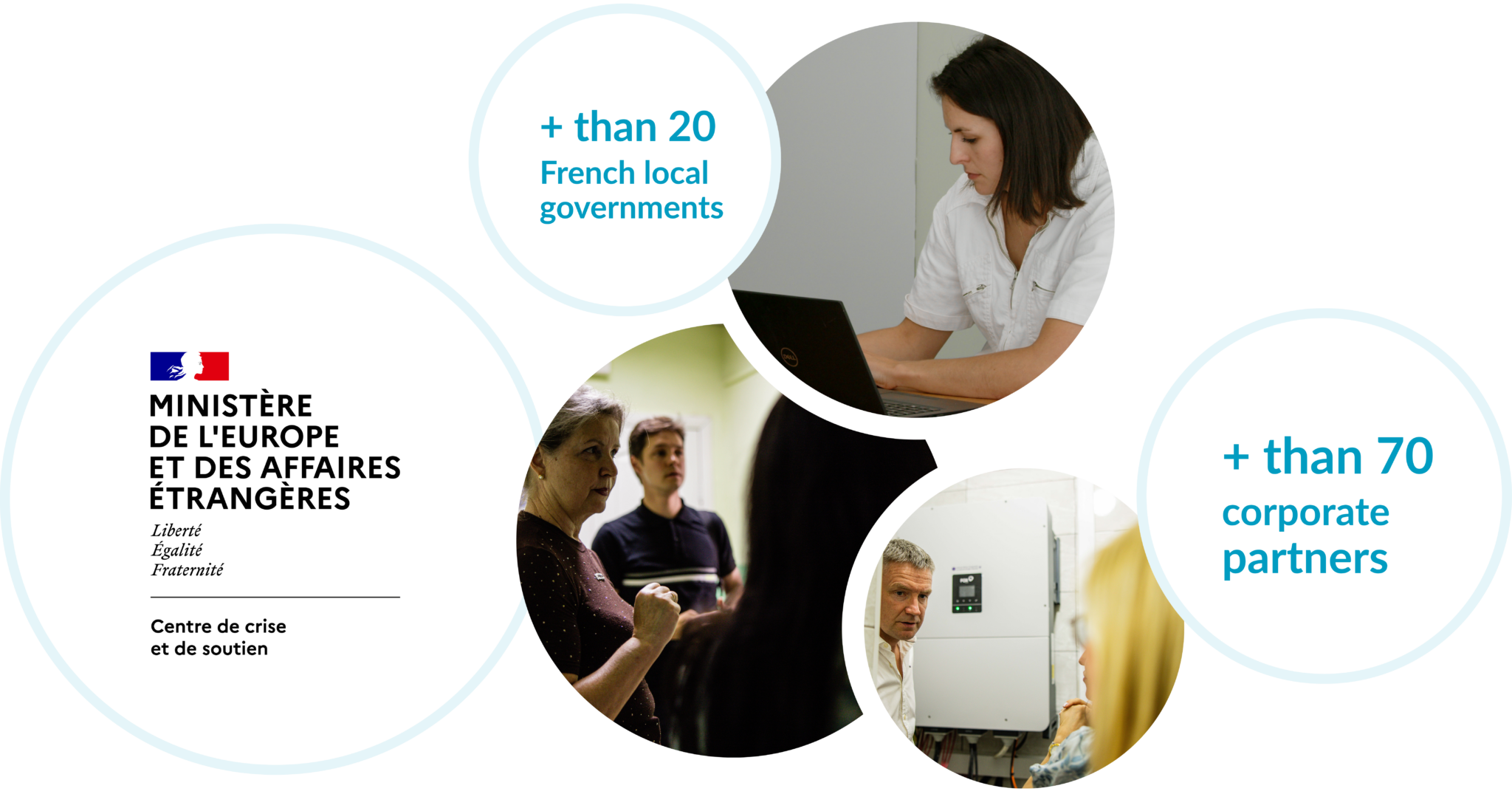
Thanks in particular to support from the Crisis and Support Center, French local governments, and companies such as Enedis and Rehlko, this equipment helps ensure the continuity of essential services: lighting, heating, medical care, shelter operations, and access to water.

The goal is to enable people to get through the winter with a minimum level of safety and dignity, while limiting the impact of power outages.

These efforts are a continuation of the actions taken over the past three winters.

Take a look back at last winter through the story of Didier, a volunteer with Electricians Without Borders.

A collective commitment to take action where the needs are most urgent

The rollout of Electricians Without Borders’ energy solutions in Ukraine is based on a collective effort involving public institutions, businesses, and local governments.

More than twenty French local governments have rallied in support of Ukraine

This humanitarian response was also made possible by the exceptional commitment of more than twenty French local governments, which are linked to Ukrainian cities and regions through partnerships or sister-city agreements.

Electricians Without Borders supports French and Ukrainian local governments in:

  • identifying needs;
  • selecting the appropriate equipment;
  • the purchase of equipment;
  • logistics;
  • the installation of energy solutions.

This initiative is part of the “Lights for Winter” campaign, launched in partnership with the NGO Stand With Ukraine to support Ukrainian regions facing power outages.

Thanks to the involvement of local governments and dedicated partners, it is possible to strengthen the country’s energy resilience and provide a concrete response to the humanitarian crisis.

Multi-stakeholder support

The Crisis and Support Center (CDCS) of the Ministry for Europe and Foreign Affairs has been a major partner in this relief effort since the start of the war in Ukraine.

Companies such as Rehlko, a signatory to the emergency agreement have also actively contributed to this humanitarian response by providing generators that are essential for maintaining critical services during power outages.

By combining our expertise with the support of donors and private partners, we can act quickly and provide a concrete and sustainable response.

Get Ready for Next Winter with Hybrid Solar Solutions

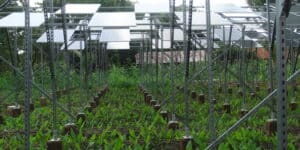
The teams at Electricians Without Borders are already preparing for next winter. In collaboration with our Ukrainian partners, we are deploying new hybrid systems that combine solar panels, storage batteries, and backup generators.

The goal is to make critical infrastructure self-sufficient, such as:

  • hospitals;
  • schools;
  • water pumping stations.

Since the start of the conflict, more than 150 hybrid solutions have already been installed.

Beyond the immediate need, this equipment offers a twofold benefit: it ensures a reliable power supply for critical infrastructure while promoting more sustainable and low-carbon energy production.

A team from Electricians Without Borders is currently on the ground to identify new priority sites to be equipped.

Supporting Ukraine: Donations Are Essential to Ensuring Access to Energy

Given the scale of the energy crisis in Ukraine, your donations help fund our activities and thus provide tangible support to civilians.

Whether you are a business, a local government, or an individual, your donations to Ukraine are tax-deductible.

Every contribution helps ensure access to electricity and water. Thank you.

This initiative is made possible thanks to the support of numerous institutional partners, local governments, and businesses, including: Association Partage-Amitié-Solidarité, ADEME, Bizline, CCAS, the Crisis and Support Center of the Ministry of Europe and Foreign Affairs, Clean Horizon Consulting, the Municipality of Fontanes, the Hauts-de-France Regional Council, the Bourgogne-Franche-Comté Regional Council, Dunkerque, Ecosystem, EDF Chinon, EDF Solar Solutions, ENEDIS, Europe On, Euro-Metropolis of Strasbourg, Alstom Foundation, Fondation de France, EDF Group Foundation, Grand Orient de France Foundation, Schneider Electric Foundation, Frégate Aéro, Graines, Intuis, Kinect Energy, La Rochelle Metropolitan Area, Legrand, Les Copains de Pauline Rhône-Alpes, City of Lyon, Megève Ski Area, Amiens Metropolitan Area, Greater Paris Metropolitan Area, Miidex Lighting, Clichy Office for European and International Exchanges, Peuples Solidaires Ballancourt, Phase Neutre, Région Sud, Rehlko, Rennes Métropole, Rotary Club of Dourdan, RTE, Saint-Brieuc Armor Agglomeration, Sicae de l’Oise, SIPPEREC, Siceco 21, Sigerly, Sied 70, SDE 25, SDE 35, SDE 22, SDEF 29, SYDESL 71, SDEEG 33, SIEIL 37, SIEL-Territoire d’énergie Loire, Sonepar France, SPIE Opérations et SA, SDEPA 64, Strasbourg (City and Eurométropole), Urbasolar, the associations “Ukraine – Rueil” and “À travers l’Europe,” the cities of Annemasse, Bures-sur-Yvette, Chaumont, Franconville, Lille, Marcilly-le-Châtel, Nancy, Paris, Plœmeur, Rueil-Malmaison, Saint-Calais, Saint-Nazaire, Winter, Stand With Ukraine, and many more to come.

Sources:
International Energy Agency (IEA)
The Conversation
Radio France – Ukraine: Addressing the Energy Crisis, with François Grünewald and Hervé Gouyet
Radio France – With Ukraine targeted by Russian strikes, the country is focusing its energy resources on hospitals